About LIGNES DE FUITE
LIGNES DE FUITE is an independent fashion incubator in Montréal. We work with designers developing their collections and with brands that hire our studio to make patterns, sew samples and produce garments.
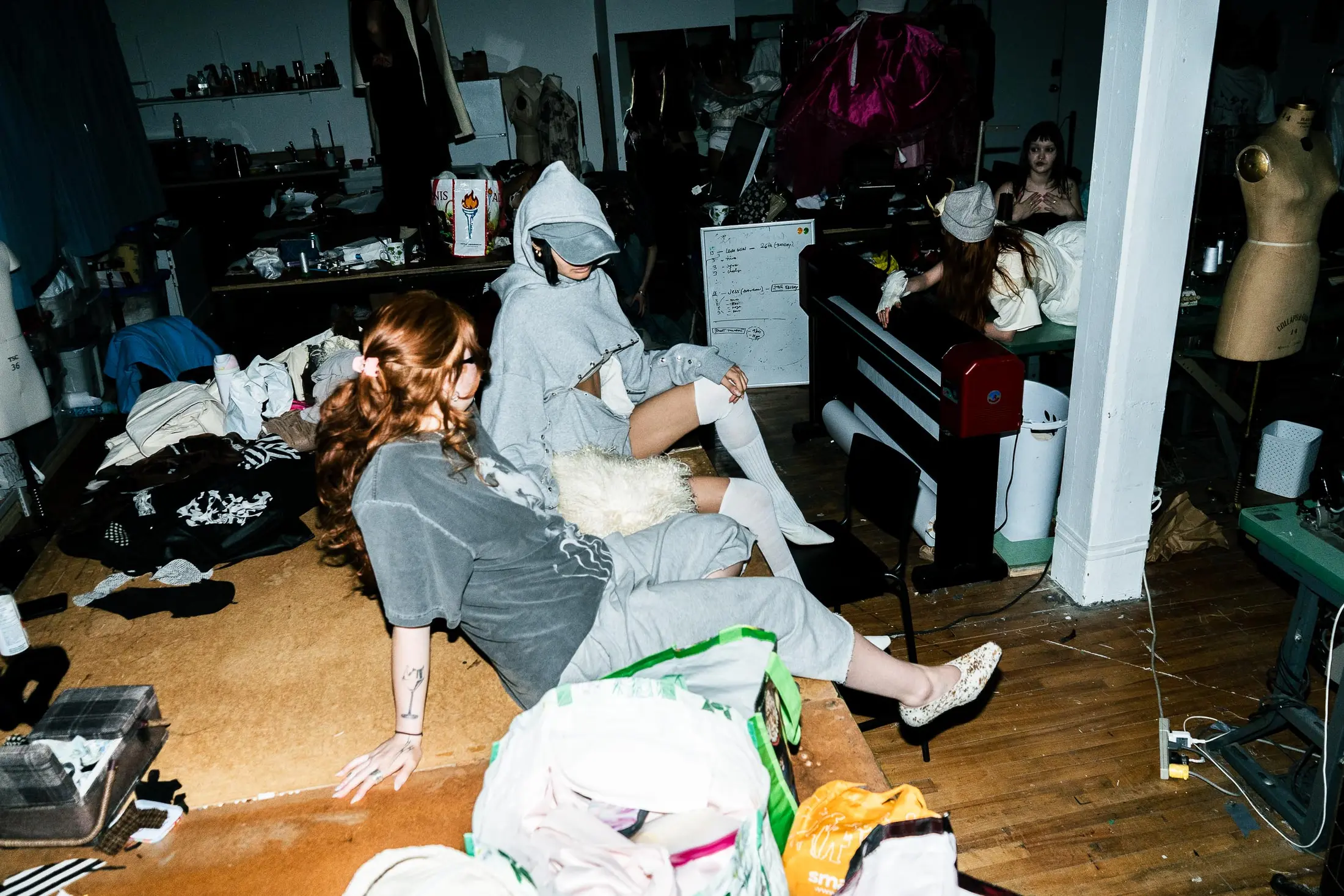
What we do
- Studio ↗
- Designers develop collections here through mentoring and residencies. Brands hire our team for garment development and production.
- Happenings ↗
- Fashion shows, exhibitions and public events bring the work of independent designers to an audience.
- Supply ↗
- Our showroom and pop-ups connect independent designers with buyers and people who want to wear their work.
- Archive ↗
- Photographs, interviews and essays document the collections and the people who make them.
Our story
Milan Tanedjikov founded LIGNES DE FUITE while teaching fashion design at LaSalle College, drawing on his experience running a clothing label. After graduation, designers still need a cutting table, machines and someone to talk through a fitting with. The shared atelier gives them a place to keep working on their collections.
In 2026, LIGNES DE FUITE received the CAFA Fashion Impact Award.
Contact & visit
4710, rue Saint-Ambroise, Studio 227
Montréal, QC H4C 2C7
Visits are by appointment. When you arrive, come to Studio 227.
Tell us about a garment project ↗Responsible practice
Shared tools. Longer use.
Industrial machines, pattern tables and working space are shared by independent designers at LDF. Keeping these resources useful is part of running the studio.
01What is already in place+
Designers use a common working infrastructure while keeping their own businesses and creative direction. Workspace, industrial equipment and technical knowledge are brought together in the same studio.
The shared model gives several practices access to equipment that would otherwise need to be sourced individually. Access and equipment use are organised around the work being made. This is a description of the operating model, not a measured claim about avoided purchases, waste or emissions.
02Purchasing, maintenance and reuse+
For purchases controlled by LDF, the first step is to check what is already available and whether an item can be repaired, adapted or reassigned. Secondhand and reconditioned equipment and reused furniture are considered before an equivalent new purchase, subject to safety, suitability, repairability, cost and availability.
Local suppliers, repair services and specialist makers are considered when they can meet the project’s needs. Location is one purchasing criterion; it is not, on its own, proof of a lower environmental impact. Durability, service access and the actual material requirements also matter.
For future showroom and retail fit-outs, the plan is to reuse available furniture, source additional equipment secondhand where practical, and separate essential purchases from later improvements. These spaces remain development projects; their planned purchases are not presented as completed actions.
032027 actions and indicators+
LDF will establish a baseline before setting reduction or sourcing-percentage targets. The following dates are implementation targets; results will be reported after records have been collected.
- By 31 March 2027
- Complete an inventory of shared equipment and reusable furniture, with condition, maintenance needs and intended use. Begin a maintenance and repair log.
- From January 2027
- Target: record every new durable-equipment and furniture purchase, its value, new/used/reconditioned status, supplier location and the reason for choosing it. Retain quotations or invoices where available.
- Quarterly from June 2027
- Review repairs and replacements, purchases by value and condition, the share purchased from Québec suppliers, and the number of active practices accessing the shared infrastructure. These are management indicators, not an environmental footprint assessment.
- First annual review: October 2027
- Milan Tanedjikov coordinates the review. Publish a dated progress update, identify gaps and revise the next actions using the records available.
This policy covers LDF’s own purchasing and shared infrastructure. Independent designers retain responsibility for their materials and production decisions. No quantified environmental result is claimed here. This statement is not a certification or an independently audited environmental report.
Questions about these practices